
Strategic Expansion
into Dubai and the GCC
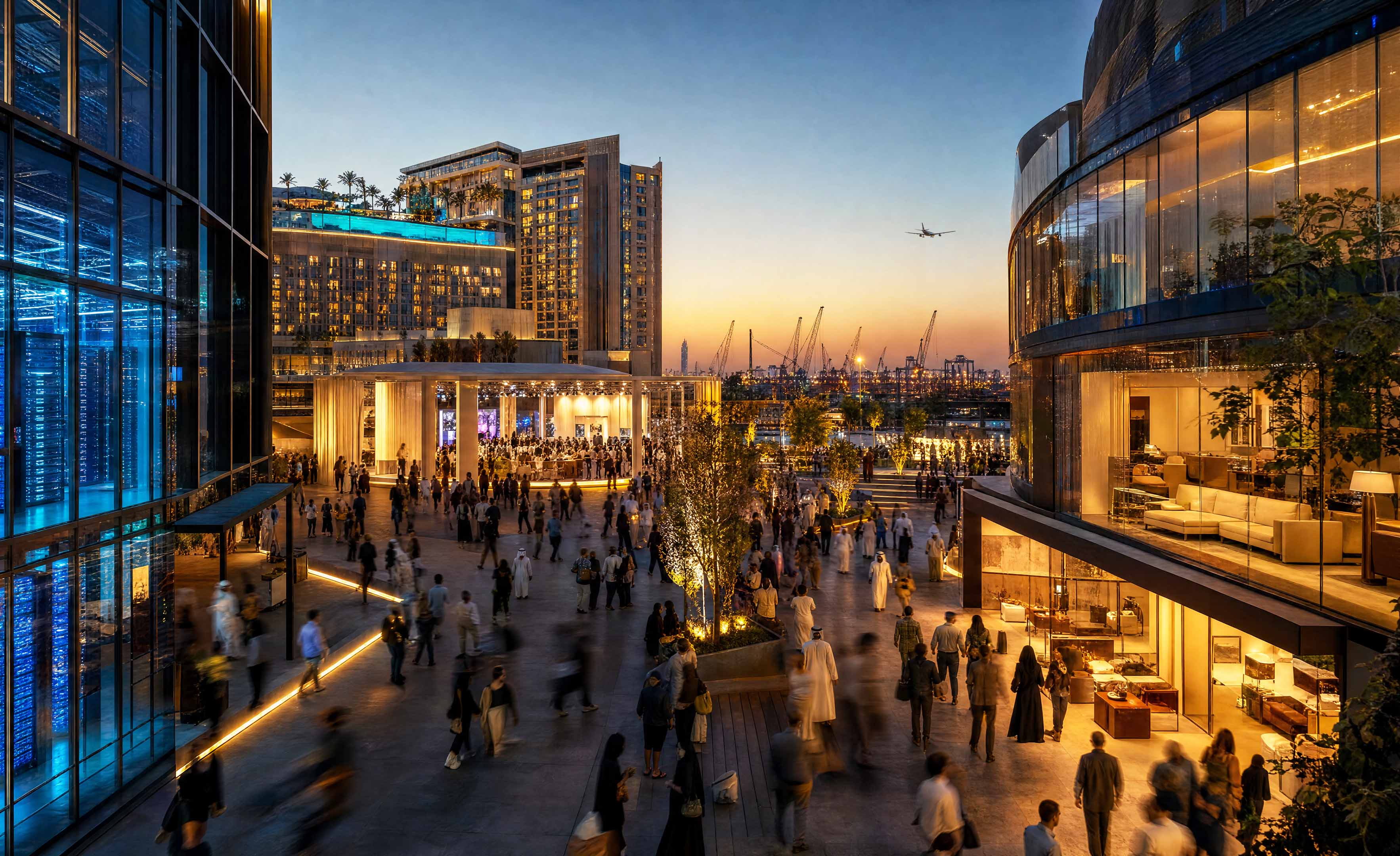
Over the past twenty years, Dubai has evolved from a regional vision into a global centre for capital, residency and entrepreneurship. Today, the GCC is no longer a secondary market, but a strategic region in its own right – with Dubai at its centre as the region's principal hub.
Over the past twenty years, Dubai has evolved from a regional vision into a global centre for capital, residency and entrepreneurship. Today, the GCC is no longer a secondary market, but a strategic region in its own right – with Dubai at its centre as the region's principal hub.
What was once considered a temporary relocation is now part of a long-term strategic repositioning for many entrepreneurs, investors and families. Infrastructure, regulatory stability and quality of life have reached a level that no longer demands compromise, but creates opportunity.
What was once considered a temporary relocation is now part of a long-term strategic repositioning for many entrepreneurs, investors and families. Infrastructure, regulatory stability and quality of life have reached a level that no longer demands compromise, but creates opportunity.

When an Address Becomes Something Bigger
When an Address Becomes Something Bigger
When an Address Becomes Something Bigger
When an Address Becomes Something Bigger
When an Address Becomes Something Bigger
When an Address Becomes Something Bigger
Dubai is Not a Destination.
It is a Platform.
Dubai is Not a Destination.
It is a Platform.
Dubai Is Not A Destination. It Is A Platform.
Dubai's Strategic Value for Businesses
Dubai's Strategic Value for Businesses
Dubai's Strategic Value for Businesses

What the Region Makes Possible
What the Region Makes Possible
What the Region Makes Possible

Beyond A Single Market
Beyond A Single Market
Beyond A Single Market





The Decisive Mistakes Happen Before The First Step
The Decisive Mistakes Happen Before The First Step
The Decisive Mistakes Happen Before The First Step

Experience You Cannot Shortcut
Experience You Cannot Shortcut
Experience You Cannot Shortcut
This is where the perspective of Hassan El Badawi, COO & Head of Strategy at Coming Home Dubai, becomes valuable.

A historical snapshot from Dubai's early years as an emerging international business hub. Originally published in Wanzl Worldwide magazine (Autumn 2007). View the full article.

How We Help
How We Help
How We Help
Before You Scale

Before You Scale
Before You Scale
Before You Choose Partners

Before You Choose Partners
Before You Choose Partners
Before You Commit Capital

Before You Commit Capital
Before You Commit Capital
Before You Choose A Structure

Before You Choose A Structure
Before You Choose A Structure
Before You Build A Team
Before You Build A Team
Before You Build A Team
Business Sectors

Consumer Goods & Premium Brands
Furniture, Kitchens & Interior Living
Hospitality & Luxury
Industrial & B2B Solutions
Real Estate & Investment
Retail, Gourmet & Lifestyle Brands
Trade, Distribution & Wholesale
Business Sectors
Consumer Goods & Premium Brands
Furniture, Kitchens & Interior Living
Hospitality & Luxury
Industrial & B2B Solutions
Real Estate & Investment
Retail, Gourmet & Lifestyle Brands
Trade, Distribution & Wholesale
Business Sectors
Consumer Goods & Premium Brands
Furniture, Kitchens & Interior Living
Hospitality & Luxury
Industrial & B2B Solutions
Real Estate & Investment
Retail, Gourmet & Lifestyle Brands
Trade, Distribution & Wholesale
If the timing feels right,
we are available for a direct conversation.
No obligation. No pitch.
If the timing feels right,
we are available for a direct conversation.
No obligation. No pitch.
If the timing feels right,
we are available for a direct conversation.
No obligation. No pitch.
FAQ
FAQ
Still have questions? Let’s talk
How does real estate relate to strategic positioning in Dubai?
For many entrepreneurs and investors, a property decision is rarely an isolated one. It often sits alongside broader considerations such as capital allocation, business interests, family planning, residency and long-term positioning within the region.
Why do so many expansion efforts in the GCC fail despite strong products or services?
In most cases, failure has little to do with the product itself. Companies often underestimate the importance of local relationships, market-specific dynamics, timing, partner selection and organisational readiness. Success in the GCC is rarely driven by speed alone.
Is the GCC one market or several distinct markets?
While the GCC shares many economic and cultural characteristics, each market has its own commercial environment, regulatory framework, relationship dynamics and business culture. A strategy that works in one country does not necessarily transfer seamlessly to another.
Is Dubai only relevant for large corporations and multinational groups?
No. Many of the companies establishing a presence in Dubai and the GCC today are owner-led businesses, family enterprises and specialised mid-sized companies. The region increasingly rewards expertise, niche capabilities and long-term commitment rather than scale alone.
Do I need to relocate to Dubai to benefit from the opportunities in the GCC?
Not necessarily. Some clients establish a permanent presence, while others engage with the region through investments, partnerships, distribution structures or selected business activities. The appropriate approach depends on individual objectives, industry dynamics and long-term ambitions.
What Is Coming Home's Role?
Coming Home supports entrepreneurs, investors and families in navigating the GCC, evaluating strategic options and gaining access to carefully selected market participants, specialist advisors and real estate opportunities where relevant to their broader objectives. Legal, tax, regulatory and operational matters are addressed in collaboration with experienced professional advisors and specialised partners. Our role is to provide context, help assess the relevant opportunities and risks, and bring the right people to the table at the right time.
FAQ
Still have questions? Let’s talk
How does real estate relate to strategic positioning in Dubai?
For many entrepreneurs and investors, a property decision is rarely an isolated one. It often sits alongside broader considerations such as capital allocation, business interests, family planning, residency and long-term positioning within the region.
Why do so many expansion efforts in the GCC fail despite strong products or services?
In most cases, failure has little to do with the product itself. Companies often underestimate the importance of local relationships, market-specific dynamics, timing, partner selection and organisational readiness. Success in the GCC is rarely driven by speed alone.
Is the GCC one market or several distinct markets?
While the GCC shares many economic and cultural characteristics, each market has its own commercial environment, regulatory framework, relationship dynamics and business culture. A strategy that works in one country does not necessarily transfer seamlessly to another.
Is Dubai only relevant for large corporations and multinational groups?
No. Many of the companies establishing a presence in Dubai and the GCC today are owner-led businesses, family enterprises and specialised mid-sized companies. The region increasingly rewards expertise, niche capabilities and long-term commitment rather than scale alone.
Do I need to relocate to Dubai to benefit from the opportunities in the GCC?
Not necessarily. Some clients establish a permanent presence, while others engage with the region through investments, partnerships, distribution structures or selected business activities. The appropriate approach depends on individual objectives, industry dynamics and long-term ambitions.
What Is Coming Home's Role?
Coming Home supports entrepreneurs, investors and families in navigating the GCC, evaluating strategic options and gaining access to carefully selected market participants, specialist advisors and real estate opportunities where relevant to their broader objectives. Legal, tax, regulatory and operational matters are addressed in collaboration with experienced professional advisors and specialised partners. Our role is to provide context, help assess the relevant opportunities and risks, and bring the right people to the table at the right time.